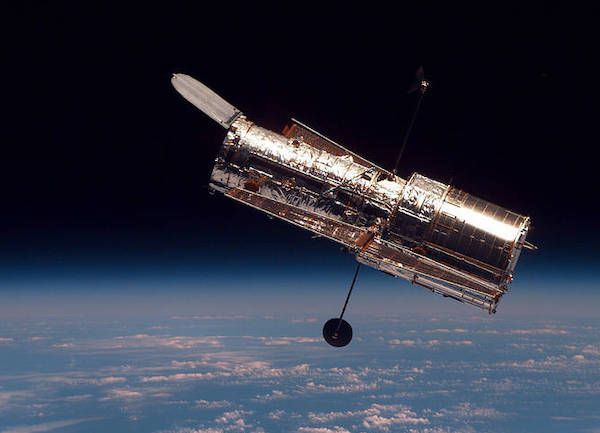
The Hubble Space Telescope (HST) is a multi-instrument observatory that has dramatically changed humanity's understanding of the universe for over two decades, with dramatic images of stars, planets, and galaxies. Hubble orbits Earth; its position above the atmosphere, which distorts and reduces the light that reaches the surface, gives it a view of the universe that typically surpasses that of ground-based telescopes. HST's various instruments investigate the universe in the visible, ultraviolet, and infrared portions of the spectrum. HST was deployed from the space shuttle Discovery on April 25, 1990. After that, the telescope underwent five servicing missions to repair or upgrade various instruments and systems.
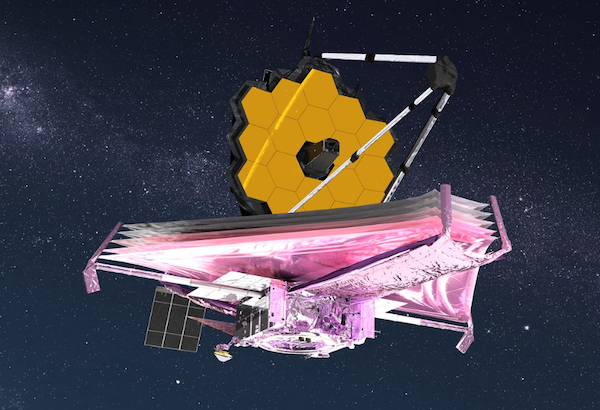
The James Webb Space Telescope (JWST) is a large space observatory that will operate in an orbit some 1 million miles from Earth. JWST will find the first galaxies that formed in the early universe, connecting the Big Bang to our own Milky Way Galaxy. It will also peer through dusty clouds to see stars forming planetary systems, connecting the Milky Way to our own solar System. Webb's instruments are designed to work primarily in the infrared range of the electromagnetic spectrum, with some capability in the visible range. The observatory was launched on Dec 25, 2021.
Key Staff
Project Scientist for Policy and Science Community:
Stefanie Milam
The Sellers Exoplanet Environments Collaboration (SEEC) brings together multi-disciplinary researchers from the Planetary, Earth, Astrophysics, and Heliophysics science divisions at NASA’s Goddard Space Flight Center to study exoplanet atmospheres and climates. Using a wide range of scientific and technical resources, SEEC scientists inform current NASA exoplanet observations and prepare for future missions.
TESS is an Explorer mission that was selected for development in 2013. Launched on April 18, 2018, TESS will conduct a two-year survey searching ~200,000 bright (V=4-12), nearby stars for transiting exoplanets, including the 1,000 closest red dwarfs similar to our Sun. The survey will focus on G- and K- type stars with apparent magnitudes brighter than 12. Simulations of the TESS mission predict that TESS will find thousands of new exoplanets, including hundreds of small exoplanets, and even a few (~5) rocky planets in the habitable zones of their host stars. With the time-ordered photometric data for these targets, TESS will provide the target list for future follow-up observations of transiting exoplanets. Because the host stars are bright and nearby, they will be ideal for ground-based observations and well suited to transit spectroscopy with JWST.